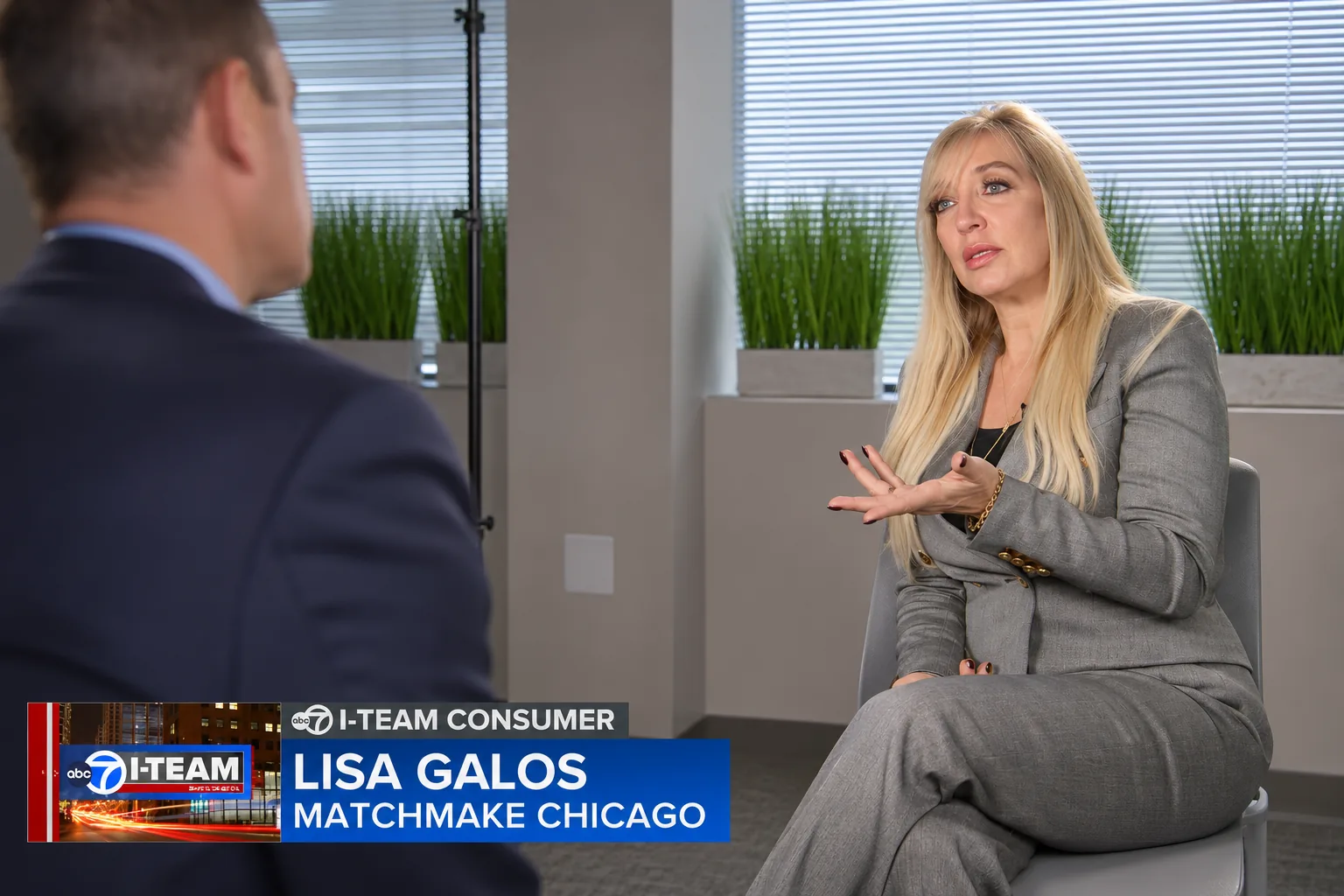
In 2023, I sat down with the ABC7 I-Team to talk about a new kind of dating danger: profile photos created by artificial intelligence. At the time, most fakes still had a giveaway. An extra finger, a melted earring, a background that didn't quite make sense. Three years later, the tools have become so good that many of those old giveaways are gone.
That matters, because romance scams are big business. Americans reported more than $1.16 billion in romance scam losses to the FTC in just the first nine months of 2025, and nearly 60% of people who lost money to a romance scam said it started on social media. A believable photo is usually the first step.
The good news is that not every polished photo is a scam. When Match Group had an outside firm analyze profile photos on Tinder and Hinge, most of the edited images came from real people using filters and face-tuning apps, not from fake identities. The goal isn't to be suspicious of everyone. It's to know the difference between a flattering photo and a person who doesn't exist.
Visual clues worth a second look
None of these prove anything on their own. But if you notice several at once, slow down.
- Too perfect, in every photo. Poreless skin, flawless hair and magazine lighting in every single picture. Real people have at least one blurry, badly lit or candid photo.
- Backgrounds that fall apart. Look past the face. Signs with text that doesn't read, railings and windows that bend or don't line up, or faces in the crowd that look smeared.
- Details that don't match. Earrings that are different on each side, glasses that blend into the skin, jewelry or collars that seem to melt, or teeth that look like one solid strip.
- Light that doesn't agree. The face is lit from one side while the shadows fall the other way, or reflections in mirrors, windows and sunglasses don't show what they should.
- A life with no one else in it. Real profiles usually include friends, family, pets or ordinary moments. Six beautiful solo portraits in six exotic places, with the same expression in each, is a pattern worth noticing.
One caution: older advice like counting fingers is no longer reliable. Today's image generators usually get hands and text right, so a clean photo doesn't prove a real person.
Five checks that work better than squinting
- Run a reverse image search. Save the photo or take a screenshot, then search it with Google Lens, TinEye or Bing Visual Search. If the same face shows up under a different name, on a stock photo site or on an influencer's account, you have your answer. No results doesn't prove the person is real, but a match tells you a lot.
- Look for the verified badge. In 2025, Tinder began requiring new U.S. users to verify themselves with a short video selfie, rolling out state by state, and other apps offer similar photo verification. A badge isn't a guarantee, but a profile that avoids every form of verification deserves extra caution.
- Ask for a casual, specific photo. Keep it easy and friendly, like a quick selfie with a thumbs up or a picture of the coffee they're drinking right now. Real people usually laugh and send one. Scammers tend to stall, change the subject or send something that doesn't quite fit.
- Video chat early. A short, unplanned video call within the first week or two is still one of the best tests. Be wary of an endless list of reasons the camera won't work, the connection is bad, or they're overseas, on an oil rig or deployed.
- Check for a digital label. Some AI tools now add invisible watermarks or "Content Credentials" to the images they create, and free tools can check for them. They're worth a try, but most apps strip this information when photos are uploaded, so no label doesn't mean no AI.
The red flags that matter more than any photo
In my experience, the conversation gives a fake away faster than the picture does. Watch for:
- Pushing to move off the dating app to text or WhatsApp right away.
- Intense affection and talk about a future together before you've ever met.
- A story that keeps changing, or details that don't add up.
- Always a reason they can't meet face to face or get on a video call.
- Any request for money, gift cards, cryptocurrency or help with an "investment." This is the line. Never send money to someone you haven't met face to face, no matter how real the relationship feels.
If you think you're talking to a fake
- Stop responding, and don't send money or personal information.
- Report the profile in the app so it can be reviewed and removed.
- Report the scam to the FTC at ReportFraud.ftc.gov. If you lost money, also file a report with the FBI at IC3.gov and call your bank right away.
- Tell a friend or family member. Scammers count on secrecy, and an outside opinion helps.
There's no shame in being targeted. These schemes are run by professionals, and smart, successful people are caught every day.
Why we meet every client face to face
This is one of the biggest reasons people come to a matchmaker. At Matchmake Chicago, every person we introduce is someone our matchmakers have met face to face and gotten to know personally. You never have to wonder whether the person across the table is real, because we've already met them.
If you're tired of second-guessing profiles, request a complimentary, confidential consultation. We'd love to hear what you're looking for.
Frequently asked questions
Can you tell if a dating profile photo was made with AI?
Sometimes, but rarely by looks alone. Today's AI images can be very convincing. The most reliable approach combines visual clues with a reverse image search, a verified badge and an early video call.
Is a filtered photo the same as an AI-generated photo?
No. Many real people use filters or retouching apps to look their best. A fake profile uses photos of someone who doesn't exist, or of someone who isn't the person you're talking to.
What should I do if I think I'm talking to a scammer?
Stop responding and never send money. Report the profile in the app and at ReportFraud.ftc.gov. If you've lost money, also report it at IC3.gov and contact your bank.
Related reading: Creating a Dating Profile when Dating Over 40